The Houston furnace problem: ten idle months, one cold week
A heating system that sits unused for most of the year is not a system in good condition. It is an untested one.
August 27, 2026 · 4 min read
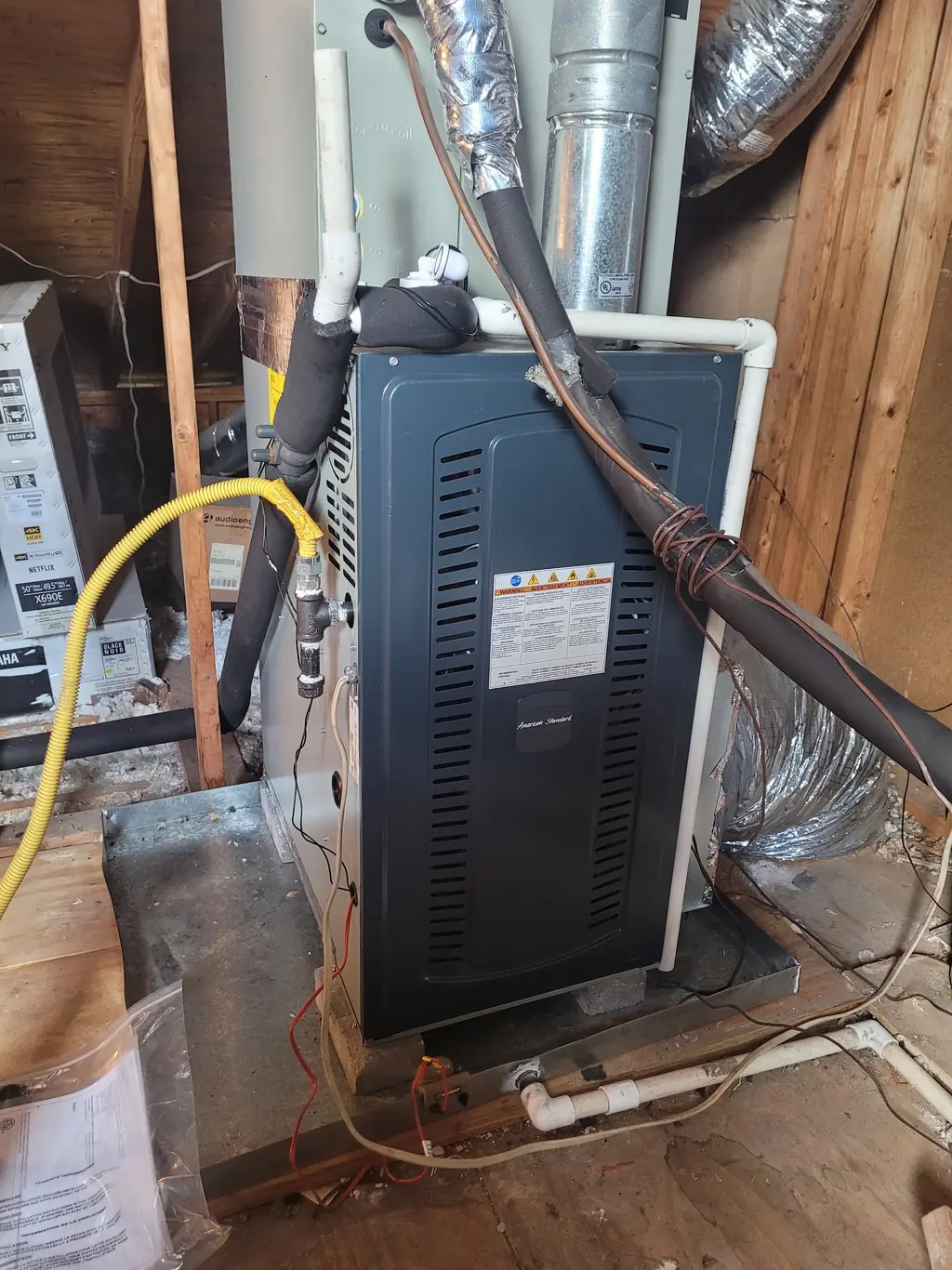
Ask most people in this area about their heating and you will get a shrug. It barely gets used. That is true, and it is precisely the problem. A furnace that runs for a few weeks a year is not a system that has been taken easy on. It is a system that has been sitting still, collecting dust, with nobody finding out whether it still works until the night everybody needs it at once.
Every year, the first genuine cold snap produces a wave of no-heat calls across the Houston area in the space of about forty-eight hours. Very few of those are dramatic mechanical failures. Most are the predictable consequence of ten months of nothing.
What ten idle months actually do
Dust is the main culprit. Over a long idle period it settles on the burner assembly, the ignition assembly and the blower. When the furnace finally fires, that dust is the reason for the burning smell people notice on the first cold morning, and in the worse cases it is enough to stop clean ignition altogether. Filters left unchanged through a long cooling season are usually loaded by the time the heating season starts, and a restricted filter makes the furnace work harder to move the same air.
Then there are the components that simply age whether or not the system runs. Safety controls drift out of adjustment. Electrical connections work loose. Flue and vent piping can be disturbed by attic work, storms or animals during the months nobody was looking at it.
The part that is not about comfort
Most heating maintenance is about cost and reliability. One item is not. When any carbon-based fuel burns, it produces gases, and when combustion is incomplete, carbon monoxide is one of them. It has no smell. A detector is the only reliable way to know it is present, which is why we recommend them in every home with a gas appliance.
That is also why a heating tune-up leads with a carbon monoxide test rather than ending with one, and why checking the flue draft, the combustion and the vent piping are all on the list. Those four checks are asking the same question from different angles: is everything that should be leaving the house actually leaving it. If you wake with a headache, and particularly if someone else in the house has one too or is hard to wake, get out of the house and get medical help. That is not a wait-and-see situation.
What to do before the first cold week
The single most useful thing is to test the system on a mild day in autumn rather than discovering its condition on the coldest night of the year. Turn the heat on, let it run for fifteen or twenty minutes, and pay attention.
- Does it ignite promptly, or does it try several times before catching?
- Is there a burning smell that clears within a few minutes, or one that persists?
- Is warm air actually reaching the rooms furthest from the unit?
- Are there new noises: rattling, screeching, or a rumble that continues after the burners shut off?
- Does it cycle on and off far more often than it used to?
- Has the filter been changed since spring?
A short trial run in October costs you nothing and converts an emergency in January into a scheduled appointment. That difference matters more than it sounds, because during a regional cold snap every heating contractor in the area is fully booked, and the wait is measured in days rather than hours.
Repairs are often smaller than people fear
When a furnace stops, homeowners tend to jump straight to replacement, and often that is not where this ends up. A substantial share of no-heat calls come down to a filter that was never changed, an ignition assembly that needs cleaning, or a safety control that has drifted and is doing its job by refusing to let the appliance run.
That said, a furnace is not something to diagnose by feel. It is a gas appliance with a flue, and the checks that matter most are the ones that need instruments. Our approach is the same here as everywhere else: take the readings first, then say what they mean. If the answer is a cleaning and a filter, that is what we will tell you.
When replacement genuinely is the answer
Systems do reach the end. Most last somewhere between ten and twenty years, and as equipment ages, efficiency can fall away sharply while repairs get more frequent. If your furnace predates the 1990s, its efficiency rating is likely to be far below what current equipment achieves, and the gap shows up on every gas bill.
Heat pumps are worth raising here, because they are a genuinely good fit for this climate. A heat pump works like an air conditioner in summer and runs in reverse in winter, so one system does both jobs, and in a region with mild winters it does the heating job very efficiently. If you are replacing cooling equipment anyway, that is the moment to have the conversation, rather than replacing the two halves separately a few years apart.
Cool-It Air Conditioning & Heating, (832) 316-2665
Call (832) 316-2665More articles
When to get a second opinion on an air conditioning quote
A quote is not a diagnosis. Here is how to tell the difference before you spend thousands of dollars.
Why your AC cools but the house still feels clammy
Hitting the set temperature is only half the job. The other half is pulling water out of the air.