Why your AC cools but the house still feels clammy
Hitting the set temperature is only half the job. The other half is pulling water out of the air.
August 27, 2026 · 4 min read
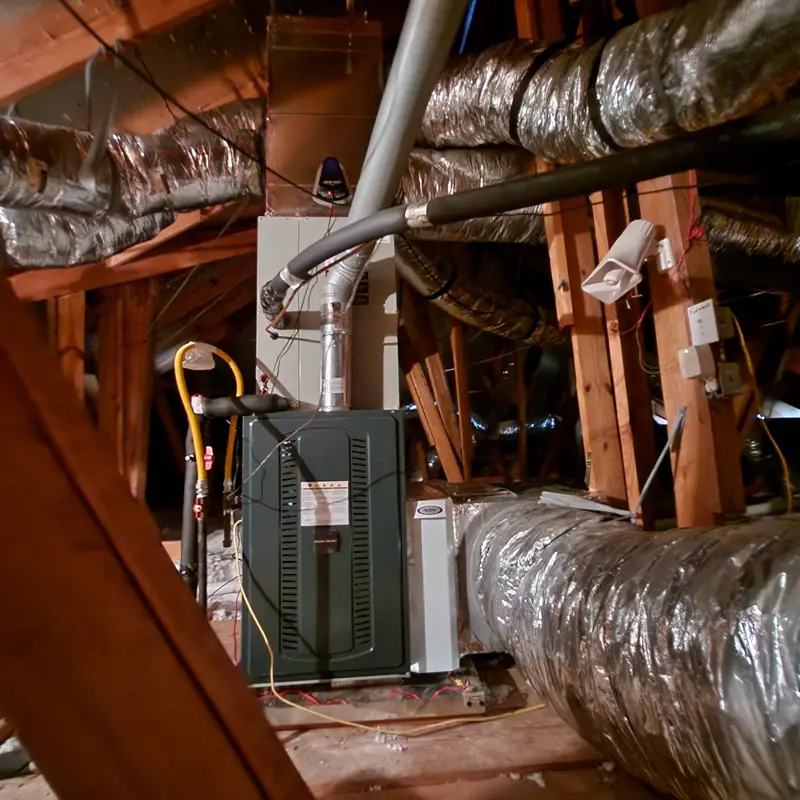
A house can sit exactly on its thermostat setting and still feel unpleasant. The air has a weight to it, surfaces feel slightly tacky, and turning the temperature down another two degrees makes it cold and clammy rather than comfortable. In Houston this is one of the most common complaints we hear, and it is almost never a thermostat problem.
An air conditioner does two jobs at once. It lowers the temperature of the air, and it removes moisture from it. The second job is the one nobody thinks about, and on the Gulf Coast it is arguably the more important of the two. When a system is doing the first job but not the second, you get a house that is cold and damp instead of cool and dry.
How an air conditioner actually dehumidifies
Warm, humid air from your house passes over the indoor evaporator coil, which is cold. Water condenses out of that air onto the coil, exactly the way it beads on a cold glass, then runs down into a collection pan and out through the condensate drain. That only happens while air is moving across a cold coil. It takes time. A system that runs in long, steady cycles pulls a great deal of water out of a house over an afternoon.
A system that runs in short bursts does not. It satisfies the thermostat quickly, shuts off before much condensation has formed, and leaves the moisture behind. You get the temperature you asked for and none of the comfort you wanted.
The most common cause is an oversized system
This is the uncomfortable one, because it is usually baked in at installation. An air conditioner that is too large for the house cools the air faster than it can dry it. It reaches the set point in a few minutes, shuts down, and repeats that all day. Those short cycles are why the house feels damp, and they cost you twice: humidity stays high, and starting and stopping is the hardest thing a compressor does, so the wear and the power bill both climb.
It is a genuinely counterintuitive point. Bigger sounds better, and in a hot climate people assume more capacity is safer. It is not. The same logic applies to heating, where an oversized furnace warms the house quickly, uses more fuel, and swings the temperature around more than a correctly sized one would.
The causes that are easier to fix
Before assuming the system is the wrong size, there are several things worth ruling out, and most of them are ordinary maintenance.
- A dirty air filter, which restricts airflow across the coil and reduces how much moisture the system can remove.
- A blower motor caked in dust, which quietly reduces airflow over time in the same way.
- A blocked condensate drain, which means water that did condense is sitting in the pan instead of leaving the house.
- An evaporator coil that has never been cleaned, insulating the cold surface from the air that needs to touch it.
- The fan set to run continuously rather than automatically, which blows moisture from the wet coil back into the house between cooling cycles.
- Low refrigerant from a leak, which changes coil temperature and hurts both cooling and dehumidification.
That fan setting one surprises people. If your thermostat fan is set to on rather than auto, the blower keeps moving air across a coil that is still wet after the compressor stops, and re-evaporates that water straight back into your house. Switching it to auto sometimes solves a humidity complaint on its own, at no cost.
Why humidity is worth taking seriously
Comfort is the obvious reason, and it is not trivial: humid air at 76 degrees feels worse than dry air at 78, which means a house with a humidity problem gets run colder and costs more to operate. But the more serious reason is what moisture does over time. Mould needs water, and it will not grow without it. Damp air, a collection pan holding standing water, and ductwork carrying spores around the house are the conditions it wants.
That is why preventative maintenance is aimed squarely at moisture. Keeping the pan under the indoor coil clean and draining freely, keeping the ductwork clean, and using a filter that actually captures spores rather than just large dust are the three practical defences. Ultraviolet lights installed next to the cooling coils are another option, and they work by killing what tries to grow on the coil and in the pan.
What to do about it
Start with the cheap things. Change the filter, check that the fan is on auto, and look at whether the condensate line is actually dripping outside on a hot day. If the house still feels damp after that, have someone measure it properly rather than guess. The useful readings are the temperature differential across the indoor coil and the refrigerant pressures, because together they say whether the coil is getting cold enough for long enough to do the drying.
If the answer does turn out to be that the system is oversized, you have not wasted the diagnosis. It changes what you do at replacement time, which is the moment that decision gets locked in for the next fifteen years. Variable speed and two-stage equipment exists precisely for this problem: it runs at a lower output for longer instead of blasting and stopping, which controls humidity far better than a single-stage system ever could. That is a conversation worth having before the old one fails, not during the week it does.
Cool-It Air Conditioning & Heating, (832) 316-2665
Call (832) 316-2665More articles
When to get a second opinion on an air conditioning quote
A quote is not a diagnosis. Here is how to tell the difference before you spend thousands of dollars.
What actually happens in an AC tune-up
Maintenance is the one service where you cannot see what you paid for. So here is the whole list.