When to get a second opinion on an air conditioning quote
A quote is not a diagnosis. Here is how to tell the difference before you spend thousands of dollars.
August 27, 2026 · 4 min read
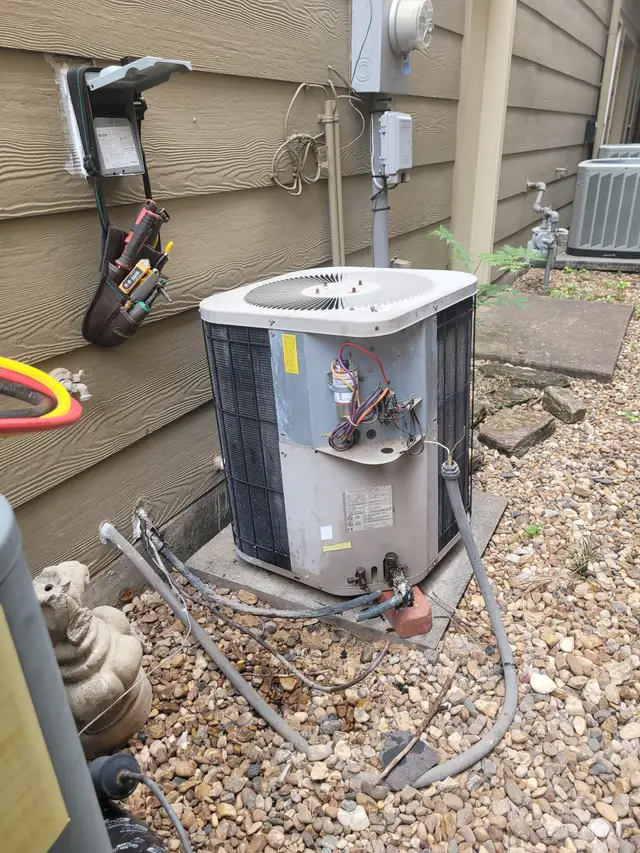
There is a particular phone call we get more than any other. Somebody has had a contractor out, been handed a number with several thousand dollars on it, and something about the conversation did not sit right. They are not accusing anyone of anything. They just want a second person to look at the same equipment and say what they see.
That call is worth making more often than people think, and it is worth understanding why. Diagnosing an air conditioner is not guesswork, but it does take time, and time is the thing under most pressure on a busy summer day. A technician who is behind on calls has a real incentive to reach for the biggest, most obvious answer. That is not fraud. It is just how a rushed diagnosis tends to land, and it is why a second look so often produces a different, smaller answer.
Signs a quote is worth checking
None of the following mean you are being cheated. Each one means the quote is resting on something you cannot see, and that is reason enough to have a second person look.
- The recommendation is a full system replacement on equipment less than ten years old.
- You were told the compressor or coil has failed, but nobody showed you a pressure or amperage reading.
- The fault was described in general terms, like the system being tired or on its way out, rather than a named part.
- The price dropped sharply when you hesitated, which suggests the first number was not tied to the work.
- You were asked to decide the same day, on a system that is still running.
- The quote covers several unrelated items at once, so no single line can be checked.
What a real diagnosis produces
When a technician actually diagnoses a system, that process leaves evidence. Gauges go on the service ports and read suction and head pressure. The electrical panel comes off, and the capacitor and contactor get inspected and tested rather than glanced at. The compressor's current draw gets measured and compared against what the data plate says it should be pulling, because a compressor that is beginning to fail shows up in the amperage well before it fails outright. Temperature differential across the coil gets measured.
Every one of those is a number. Ask for them. A technician who took the readings will have them, and will usually be pleased to be asked, because it is the part of the job most customers never see. A technician who did not take them will change the subject, and that in itself is your answer.
The questions to ask, in order
- Which specific part has failed, and what reading told you that?
- What were the pressures and the amp draw, and what should they have been?
- Is this a repair that can be done, or is the part genuinely unavailable for this unit?
- If I do nothing for two weeks, what actually happens?
- Can I have the quote itemised, with parts and labor separated?
- What is your contractor licence number?
That last one matters more than people realise. In Texas, air conditioning contractors are licensed, and the number is a matter of public record. Ours is TACLB 28315E and it is printed on our own logo, which means you never have to ask us for it. Anyone reluctant to give you theirs has told you something important.
What second opinions actually turn up
In our experience the outcome splits three ways, and only one of them is dramatic. Sometimes the first quote is completely correct, we confirm it, and the customer goes ahead with more confidence than they had before. Sometimes the fault is real but smaller than described, and a repair does what a replacement was quoted for. And occasionally there is nothing wrong at all.
One customer called us after another company listed several items to be replaced on a relatively new system. He had already called two other companies before us. We spent longer on the diagnosis than either of them, went through the system properly, and none of the eight thousand dollars of recommended work turned out to be needed. Another had been quoted around three thousand two hundred dollars and needed two things done. A commercial tenant was told by their building manager that their unit was causing problems in the building, with a repair quote of four hundred dollars attached. We went out, photographed the unit, and showed the managers that the unit and both the primary and secondary drain lines were working properly.
Getting a second opinion without wasting anyone's time
Have the first quote in front of you when you call, and read it out. Say what the system is doing in plain terms: running but not cooling, tripping the breaker, a noise that started last Tuesday. Have the age of the equipment if you know it, and the brand. If you have a photo of the data plate on the outdoor unit, that is genuinely useful.
Then let the second technician look at the system without telling them what the first one concluded until afterwards. That is the whole value of a second opinion. If you lead with the answer, you have narrowed what they look at, and you have paid for a confirmation rather than an assessment.
If it turns out the first quote was right, you have lost very little and gained certainty on a large purchase. If it turns out to be something smaller, you have saved a great deal. Either way you end up making the decision on evidence, which is the only sensible way to spend that kind of money. We cover Cypress, Houston and Spring, and this is the call we would most like to get.
Cool-It Air Conditioning & Heating, (832) 316-2665
Call (832) 316-2665More articles
Why your AC cools but the house still feels clammy
Hitting the set temperature is only half the job. The other half is pulling water out of the air.
What actually happens in an AC tune-up
Maintenance is the one service where you cannot see what you paid for. So here is the whole list.